
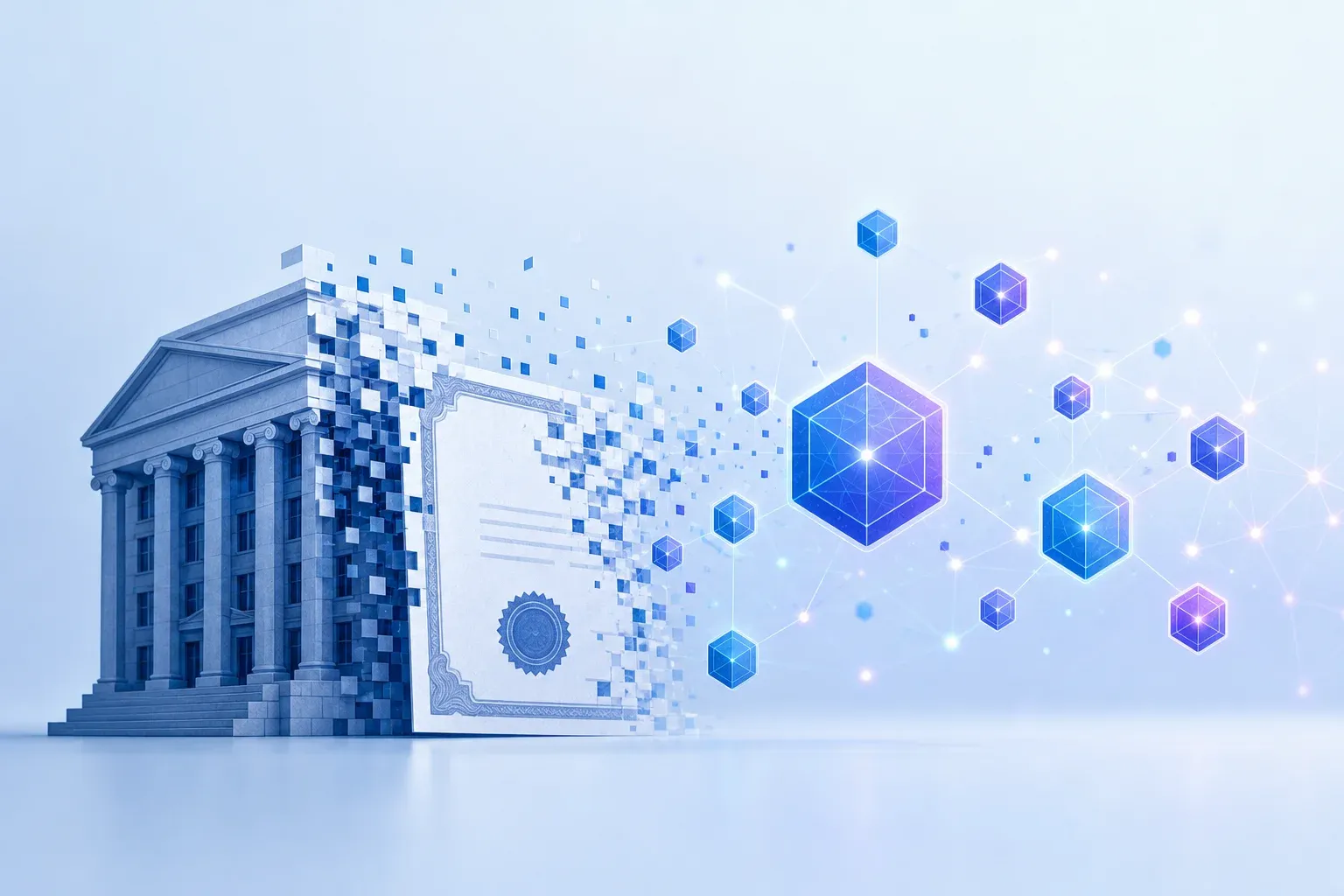
Real-world assets (RWA) in crypto are digital tokens backed by physical or traditional financial assets that exist off-chain, such as government bonds, real estate, or private credit. Each token represents ownership of, or a claim on, the underlying asset. This article explains how RWA tokenization works, what you actually hold when you buy an RWA token, and what to check before getting involved.
What are real-world assets (RWA) in crypto?
What are real-world assets (RWA) in crypto?
Real-world assets in crypto are digital tokens that represent a claim on a physical or traditional financial asset. Common examples include government treasury bills, money market funds, corporate bonds, real estate, and private credit — issued as tokens on a blockchain.
The key distinction between RWAs and most crypto tokens is where their value comes from. An RWA token's value is tied to an off-chain asset, not to blockchain activity or token supply dynamics. If the underlying asset pays interest, the token holder receives a proportional return. If the asset falls in value, the token falls with it.
RWA tokenization has attracted major institutional participants. BlackRock's BUIDL fund, a tokenized treasury product on Ethereum, crossed $1 billion in assets under management in 2024. Franklin Templeton and JPMorgan have both issued tokenized fund products. The Boston Consulting Group projects the tokenized asset market could reach $16 trillion by 2030.
Not all tokens labelled "RWA" work the same way. Some represent direct asset ownership. Others represent a yield-bearing claim on a pooled fund. Some are governance tokens for protocols that deal in RWAs, which is a different thing entirely: the governance token gives you voting rights over the protocol, not exposure to the underlying assets it manages.

RWA tokens vs. governance tokens
A protocol like Ondo Finance issues both USDY, a yield-bearing token backed by US treasuries, and ONDO, a governance token for the protocol. These are different products. Buying ONDO does not give you exposure to treasury yield.
How does RWA tokenization work?
How does RWA tokenization work?
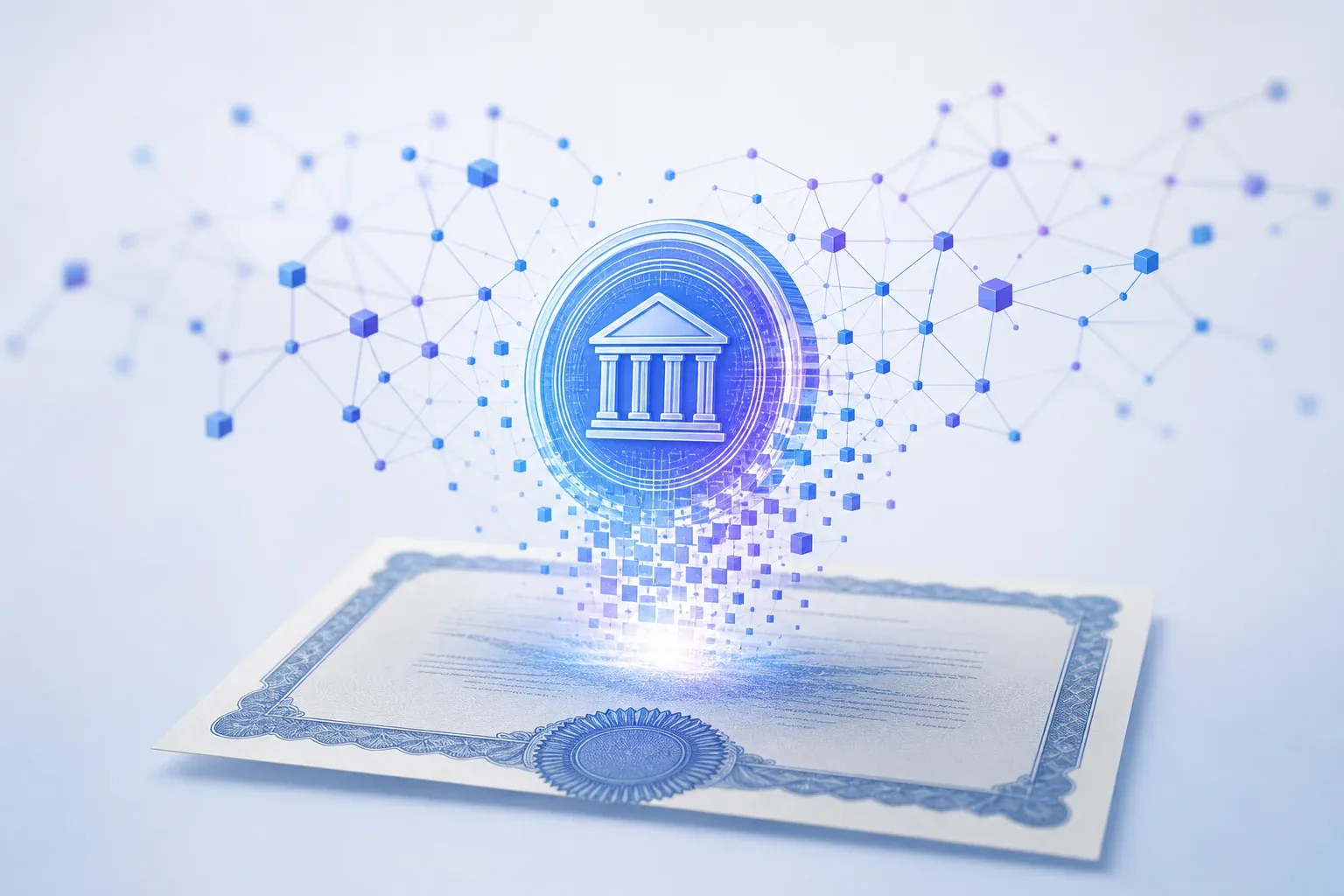
Tokenization converts a traditional asset into a blockchain token through a structured process involving asset custody, a legal wrapper, and a token issuance mechanism.
The issuer first acquires the underlying asset, such as US Treasury bills, and holds it inside a legal entity or special-purpose vehicle. The issuer then creates tokens on a blockchain, each representing a proportional claim on the assets held. Token holders receive returns proportional to their holdings, distributed on-chain. When a token holder wants to exit, they submit a redemption request, the issuer sells or redeems the underlying asset, and the proceeds are returned.
Price oracles connect the off-chain asset value to the on-chain token. An oracle feeds real-time valuation data to the blockchain so the token price reflects what the underlying asset is currently worth. The integrity of this price feed is critical: if the oracle fails or is manipulated, the token price decouples from the actual asset value.

Access is not open to everyone
Most RWA token products require KYC verification and whitelist approval before you can buy. Some are further restricted to accredited investors or users in specific jurisdictions. Check eligibility on the issuing platform before assuming you can participate.
What to know before buying RWA tokens
What to know before buying RWA tokens
RWA tokens carry both the market risk of the underlying asset and the additional risks of the blockchain and issuer layer. These risks stack on top of each other rather than cancel out.
Issuer risk means your returns depend on the issuer managing the underlying assets correctly and remaining solvent. If the issuer defaults, the assets held in the special-purpose vehicle may be recoverable through legal process, but the outcome is not guaranteed and the process can be slow.
Regulatory status varies significantly by jurisdiction. In the EU, tokenized securities fall under existing securities laws alongside the MiCA digital assets framework. In the US, the SEC treats most tokenized securities as regulated securities, with availability to retail investors depending on the specific product. Check what is accessible and legally available in your country.
Smart contract risk is a layer that traditional asset ownership does not carry. The token issuance and redemption process runs on code. Bugs or exploits in the smart contract can affect access to funds. Look for products that have been independently audited and have a clear incident response process.
Keep reading
FAQ
What is the difference between an RWA token and a DeFi governance token?
An RWA token is backed by an off-chain asset such as a treasury bond or real estate, and its value comes from that underlying asset. A governance token gives you voting rights over a protocol that works with RWAs, but does not give you exposure to the assets themselves. The two types serve different purposes and carry different risk profiles. Always check which type a token is before buying.
Do I need KYC to buy RWA tokens?
Most RWA token products require KYC verification and whitelist approval before you can purchase. Some products are further restricted to accredited investors or users in specific jurisdictions. Check the eligibility requirements on the issuing platform before attempting to buy.
What are some examples of real-world assets in crypto?
Common examples include tokenized US Treasury bills such as BlackRock BUIDL and Ondo Finance USDY, tokenized money market funds such as Franklin Templeton's OnChain US Government Money Fund, tokenized real estate, and tokenized private credit. By assets under management, tokenized government securities are the largest category.
Products and features listed may be subject to change and are not a commitment to deliver any material, code, or functionality. We reserve the right to amend, cancel, or suspend any features or products without prior notice to you.