
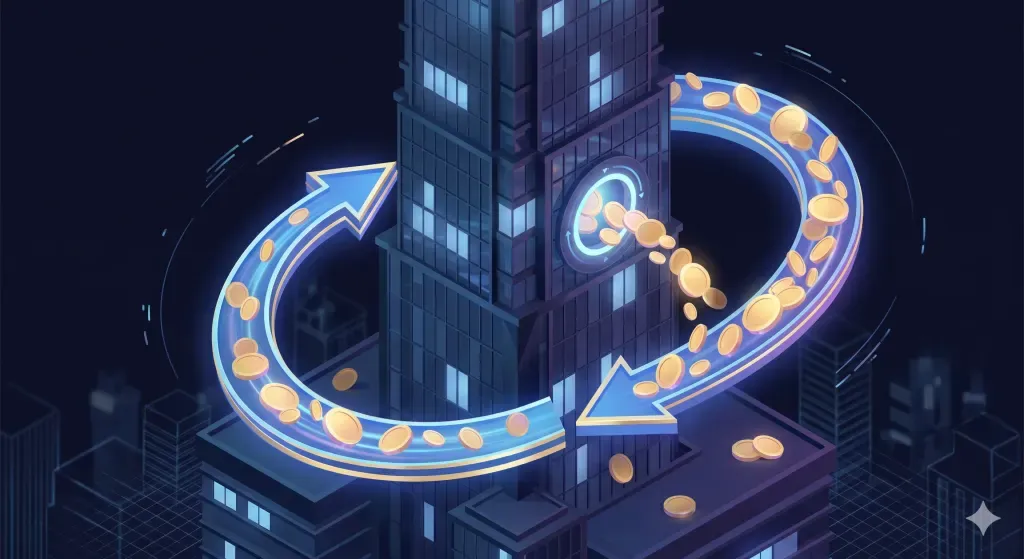
A stock buyback is when a company uses its own cash to repurchase its shares from the open market. It reduces the number of shares in circulation. This guide explains why companies do it and what it means for traders.
Why do companies buy back their own stock?
Why do companies buy back their own stock?
Companies buy back shares for several reasons. The most common is that management believes the stock is undervalued. Repurchasing shares at a lower price benefits remaining shareholders.
Buybacks are also a way to return cash to shareholders. Instead of paying a dividend, a company reduces its share count. This increases earnings per share for those who hold.
Some companies buy back shares to offset dilution from stock-based employee compensation. When employees receive shares as pay, the total count rises. Buybacks counteract this.
Buybacks can also signal confidence. A company that commits cash to repurchase its own shares is saying it has no better use for that money. Markets often read this positively.

Is a stock buyback a good thing?
Is a stock buyback a good thing?
Generally, yes. A buyback signals that a company believes its stock is undervalued. It is a way of returning cash to shareholders.
When a company repurchases shares, the total number of outstanding shares decreases. Each remaining share represents a slightly larger ownership stake.
Buybacks are typically seen as a positive signal. They suggest the company has strong cash flow and confidence in its own prospects.
Not all buybacks are positive signals. A company that borrows money to buy back shares while its business is struggling may be masking deeper problems.
How does a stock buyback work?
How does a stock buyback work?
A company announces a buyback program. It states how much it plans to spend and over what time period.
The company then purchases its own shares on the open market at current prices. This happens gradually over weeks or months.
Repurchased shares are either cancelled or held as treasury stock. Cancelled shares permanently reduce the total share count.
Fewer shares outstanding means earnings are divided across a smaller number of shares. Earnings per share increases even if the company's total profits stay the same.

Note
When shares are cancelled, earnings are divided across fewer shares. Earnings per share rises even if total profit stays the same.
What happens to stock prices after a buyback?
What happens to stock prices after a buyback?
Stock prices often rise after a buyback announcement. Markets tend to read it as a positive signal from company management.
The actual price impact depends on broader market conditions. A buyback in a rising market may have limited additional effect. A buyback during a sell-off can help slow a decline.
Over time, consistent buybacks tend to support stock prices. Fewer shares means each one captures a larger share of the company's future value.
For active traders, buyback announcements are worth watching. They can create short-term momentum and shift sentiment around a stock quickly.
Keep reading
What are blue-chip stocks?
Blue-chip stocks are shares of large, well-established companies. Learn what makes a stock blue-chip, which ones are most traded, and how they behave.
Types of stocks explained
Stocks come in different types. Growth stocks, value stocks, common shares, preferred shares. Learn what each one is and how they behave.
What Is a Stock Index
Continue with a related Cronos Learn article.
Products and features listed may be subject to change and are not a commitment to deliver any material, code, or functionality. We reserve the right to amend, cancel, or suspend any features or products without prior notice to you.